The Singularity: Too Good to Pass Up, Unfortunately

Many technologists believe that we’re approaching The Singularity. “The” is often capitalized implying that it’s the only one worth considering — the big one! I believe, however, that mankind has survived significant singularities already, and that each has left us worse for the wear. This next singularity will likely be as insidious, and therefore similarly unavoidable and detrimental to our species.
What is The [Technology] Singularity?
If you don’t know by now, The Singularity, as described by technologists, is the point in time when technological growth becomes uncontrollable or irreversible (Wikipedia). Some technologists cite it more concretely as the point when AI can improve itself faster than we can improve it. We don’t know when it will occur (or even “if”), just that every day, with every technological breakthrough, we’re accelerating toward it.
There is debate as to whether it’ll be good for mankind or detrimental. The hopeful side contends that advanced and/or super-intelligent technology will be able to solve our most pressing problems — disease, climate change, etc. The despairing side argues that we may lose control of it and get wiped out by it, a la Terminator.
I lean toward the despairing side, though not because I believe there is an existential risk of getting wiped out. I despair because I recognize that we’ve encountered singularities like this before, and each one has left mankind worse off — in my opinion — than before, in terms of happiness and well-being.
What Other Singularities?
By “prior singularities.” I’m referring to points in human history that a human-driven shift had occurred that ended up being irreversible and has caused human experience to warp around the shift itself. These have been points of no return, in the same way The Technology Singularity is expected to be:
The Agricultural Singularity
a.k.a. The Neolithic Revolution.

While I doubt anyone in 12,000 BC watched the first seeds being dropped in the dirt and prophesized the breakdown of our evolutionarily-designed, nomadic lifestyle, maybe they should have. Indeed agriculture has been a singularity, because our social structures, systems of government, and lifestyles have completely converged around it. Nearly every human on the planet is dependent upon agriculture to survive, and there’s no going back: At our current size and density, it would be unsustainable to feed the world with our former hunter-forager lifestyle. So it’s agriculture from here on out, and hence why I believe this to be the first singularity we encountered.
Agriculture is often celebrated as providing mankind with reliable food supply, and as a result of less time spent foraging and hunting, we were “blessed” with free time to innovate, build, and reproduce. We often fail to reflect, however, on the detrimental affects of a farming lifestyle. In fact, agriculture has made many people slaves (both figuratively and literally) to toiling over a single plot of land, it created the first social inequities as ownership of land and goods was initially embraced, it resulted in monotonous specialization of labor so that equipment and buildings could be maintained, it forced people into disease-ridden cities to trade and acquire goods, and it created a population that is — to this day — malnourished with a grain-based diet that is protein- and nutrient-deficient.
Widespread agriculture took hold of our species over the course of many centuries as a result of developing the knowledge, skills, and tools to farm. Though today’s technology revolution is occurring much more quickly — on timescales that a single human can observe — the pattern is similar. In the same way that the promise of reliable food was too good to pass up, so might be the promise of super-intelligent machines. The consequence of agriculture was a complete dependence on the new system and many first-encountered challenges of widespread disease, crime, famine, and even boredom that still plague our species today. The technology singularity will bring new and different challenges, no doubt, but in spite of this, the buzz about “too good to pass up” can be heard today that is reminiscent of agriculture.
The Corporate Singularity
a.k.a. The Capitalist Revolution.
The Dutch East India Company is commonly cited as the first corporation ever established. I doubt anyone in 1600 AD was sounding the alarms, as the paperwork was signed, that “The Corporate Singularity is nigh!”, but maybe they should have been. Because corporations have ruled the world ever since, largely to the detriment of the individual and our planet.
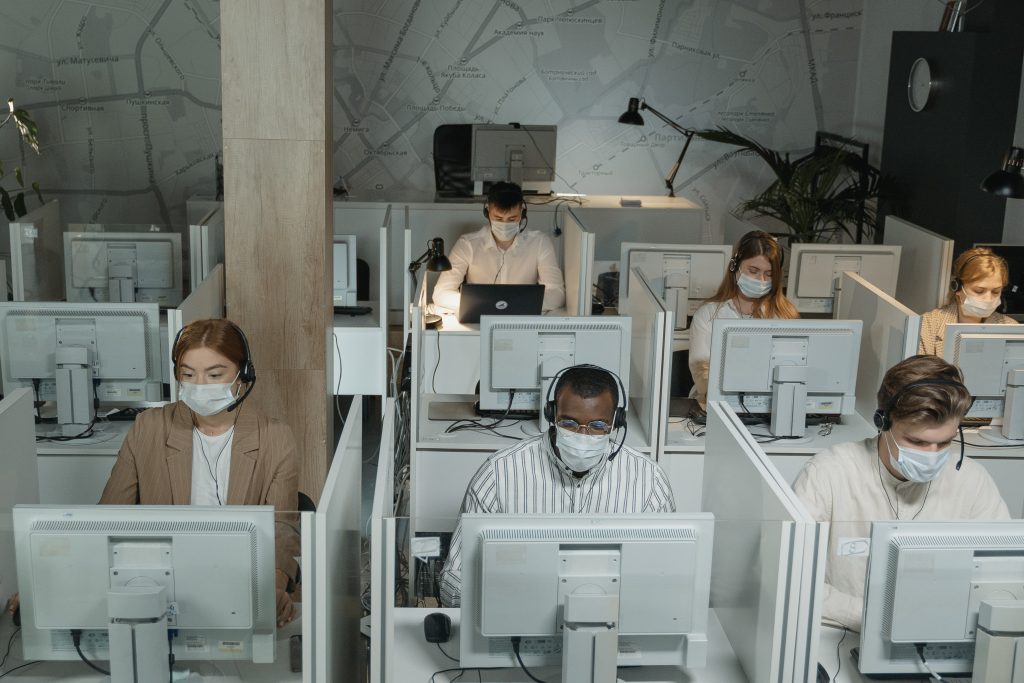
Sure corporations have brought about innovations and luxuries that we all relish in today: iPhones, airline travel, and SUVs. But in the grand scheme, I would argue that they have done more harm than good. Corporations control an insane proportion of the world’s resources (Walmart’s revenue alone exceeds Spain’s and Australia’s economies, for example) and thus have the inclination and ability to make self-interested decisions: When corporations find it convenient to pollute, they change or circumvent laws to pollute. When corporations want to go to war over oil, persuade and incentivize government officials to go to war. When corporations want to turn a profit selling cancer sticks, they lobby and market cigarettes and soda pop to hapless individuals. And when corporations need people to carry all of this out, they setup cubicle farms for the masses to waste away in. Corporations reap the profits and real people suffer.
Corporations were a singularity. Ever since the incorporation of the East India Company, this has been the surest way to generate wealth, i.e. convince many people to work for you, while you reap the rewards. Today, you may argue, that corporations are disrupted and taken down by smaller, nimbler companies regularly, and this may be true. But the “little guys” soon realize the need to accrue a larger staff to handle growing demand, and so they become corporations themselves. Thus corporate structure is a man-made innovation that we seemingly can’t escape. And as long as corporate behemoths rule the world, the well-being of the individual and even the planet will be neglected.
The Next Singularity
Both times above that we reached course-altering inflection points that promised to make life a little easier, a little more comfortable, a little more secure — we let it slide into our lives and take over without thinking about the ramifications. While the “singularities” I mention above have largely kept their initial promises, they’ve done so at the cost of our human nature. Most of our species is living out shallow, neglected, stunted lives since their occurrence.
The AI and automation singularity ahead of us promises to make our lives easier and more secure in many ways — and others that we can’t yet even imagine. So it’s hard to believe that we’ll say “No” and shut it down. Sure, we may delay or detour if signs point to some really catastrophic event — of the Terminator variety — but barring that, we’ll likely let it slide right into our lives the same way we did for the above. And as singularities have in the past, this won’t occur as a single decision — a switch that can be flipped on or off — but as a long series of events that promise incremental advantage. We’re already deep into that series of events as they relate to technology.
Looming advanced technology and super-intelligence may make life easier and more comfortable, but at what price to our planet and humanity?